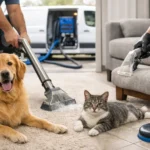






A freshly cleaned carpet should not leave you wondering whether your dog can lie down in the living room or if your cat will pick up residue on its paws. For many homeowners, the real question is simple: are carpet cleaning chemicals safe for pets? The honest answer is yes, they can be – but it depends on what is used, how much is used, how well it is extracted, and how long the carpet is allowed to dry.
That last part matters more than most people realize. Pets spend far more time in direct contact with carpet than people do. They walk on it, lick their paws, stretch out for naps, and in some cases chew or mouth fibers around the edges of a room. So pet safety is not just about whether a product is labeled safe. It is also about whether any meaningful residue is left behind after cleaning.
Are Carpet Cleaning Chemicals Safe for Pets When Used Properly?
In professional carpet cleaning, the biggest safety difference is often not the word “chemical” itself. Water is a chemical. Vinegar is a chemical. The better question is whether the cleaning agents are appropriate for indoor residential use, properly diluted, thoroughly rinsed, and removed from the carpet instead of left behind.
When a trained technician uses the right products in the right amounts, pet risk is generally low. Problems tend to happen when too much detergent is used, spot removers are overapplied, or carpets are left too wet for too long. In those cases, residue can remain in the fibers, and damp carpet can continue releasing odors or irritating sensitive pets.
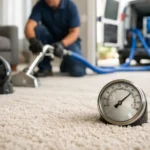
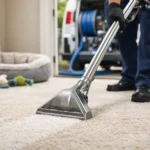
This is one reason truck-powered hot water extraction is widely preferred for deep residential carpet cleaning. It does not just apply solution. It also rinses and removes soil, contaminants, and excess cleaning agents from the carpet. That extraction step is what helps reduce residue and supports faster drying.
What Makes a Carpet Cleaning Product Safer for Pets?
Pet-safe cleaning is less about marketing language and more about practical performance. A safer product is one that cleans effectively, is designed for carpet use, and does not linger in the home as a heavy residue or strong irritant. Mildness matters, but so does removal.
A few factors make a real difference. Low-residue formulas are preferable because they are less likely to stay in the carpet after cleaning. Proper dilution matters because even a good product can become a problem if it is too concentrated. Fragrance level matters too, especially for pets that are sensitive to scents. A strong perfume smell may suggest unnecessary additives, and it can irritate both people and animals.
It also helps when the cleaning process includes a clear rinse and strong extraction. If the carpet feels crunchy, sticky, or overly damp after cleaning, that is not a good sign. A clean carpet should feel clean, not coated.
Ingredients and Situations That Deserve More Caution
Some pets are more sensitive than others. Older animals, puppies, kittens, birds, and pets with breathing issues or skin conditions can react more strongly to residues or fumes. That does not mean professional cleaning is unsafe for them. It means the process should be handled thoughtfully.
The products and situations that deserve extra caution usually include heavily fragranced deodorizers, solvent-based spotters, disinfectants not meant for soft surfaces, and treatments that are applied without a full rinse. Flea treatments and odor-masking products can also be a concern if they are used casually or layered on top of each other.
Urine treatment is one area where homeowners should be especially careful. Pet accidents often lead people to use multiple over-the-counter products in the same area, hoping one of them will work. That can create a chemical mix that is harder to remove and sometimes more irritating than the original stain. For recurring pet spots, it is usually better to have the area evaluated and cleaned thoroughly rather than repeatedly treated with store-bought sprays.
Drying Time Is a Big Part of Pet Safety
Even if the cleaning products themselves are appropriate, pets should stay off the carpet until it is dry. Damp carpet is more likely to transfer residue to paws and fur, and pets may be tempted to lick at a freshly cleaned area if it smells different.
Fast drying is not just a convenience. It is part of a safer result. The sooner the carpet dries, the less opportunity there is for residues to remain mobile in the fibers. Quick drying also reduces the chance of musty odors or issues related to trapped moisture.
This is where cleaning method really matters. A low-moisture approach may dry quickly but not always clean deeply enough. On the other hand, a poorly performed wet cleaning can leave excessive moisture behind. The goal is balanced cleaning – deep soil removal, effective rinsing, and strong extraction so carpets dry in a reasonable time.
In many homes, that means keeping pets out of the cleaned rooms for several hours, sometimes longer depending on humidity, airflow, and carpet thickness. Your technician should be able to give you a realistic drying estimate, not a vague guess.
DIY vs. Professional Cleaning for Homes With Pets
Many store-rented machines and consumer carpet shampoos are marketed as pet friendly, but they come with trade-offs. DIY machines often do not extract as strongly as professional equipment, which means more water and detergent can stay in the carpet. That leftover moisture can pull soils back to the surface, leave residue behind, and create a tacky feel that attracts new dirt.
That does not mean every DIY cleaning is unsafe. It does mean the margin for error is smaller than people expect. If you use too much product or do not rinse thoroughly, your pet may be exposed to more residue than if the carpet had been professionally cleaned with stronger extraction.
For homes with multiple pets, repeated accidents, or large carpeted areas, professional service is usually the more dependable choice. An experienced owner-operated company has an advantage here because the same crew is accountable for the work each time. That consistency often leads to better product selection, better judgment around problem spots, and a more careful approach inside the home.
How to Prepare for Pet-Safe Carpet Cleaning
Before a cleaning appointment, it helps to mention your pets in advance. Let the technician know if you have a puppy, a senior dog, a cat that licks surfaces, a bird, or a pet with allergies or respiratory issues. Those details can shape product choices and help avoid unnecessary fragrances or treatments.
On the day of service, keep pets in a separate dry area away from hoses, equipment, and open doors. After cleaning, wait until the carpet is fully dry before allowing them back into the room. If your pet is very curious, it may be smart to keep that separation in place a little longer.
You can also improve drying by running ceiling fans, using air conditioning, or opening windows when weather allows. Good airflow supports a cleaner finish and a safer return for both pets and people.
Questions Worth Asking Before You Book
If pet safety is a priority, ask how the company handles residues, rinsing, and drying time. Ask whether the cleaning agents are designed for residential carpet use and whether strong perfumes or deodorizers are optional. Ask what they recommend for homes with pets that spend a lot of time on the floor.
A trustworthy company should answer directly. You should not have to sort through vague promises or broad claims that every product is “all natural” and therefore automatically safe. Good service providers explain the process, the trade-offs, and the aftercare in plain language.
For example, a deodorizer may improve odor control, but if a customer is concerned about sensitivities, it may be better to skip it unless it is truly needed. That kind of practical conversation is usually a better sign than polished marketing phrases.
The Bottom Line for Pet Owners
So, are carpet cleaning chemicals safe for pets? In most cases, yes – when the products are used correctly, rinsed well, and not left sitting in a damp carpet for hours. The real issue is not whether any cleaning agent was used at all. It is whether the carpet was cleaned in a way that leaves it fresh, properly extracted, and dry enough for normal household life.
If you share your home with pets, choose a carpet cleaner who treats your concerns seriously, explains the process clearly, and respects the fact that your carpet is not just a surface. It is where your family lives, including the four-legged members. A good cleaning should leave your home feeling healthier, not uncertain.