





A rental can look empty and still fail inspection the moment someone looks down. Scuffs in the hallway, pet odor trapped in carpet, sticky kitchen tile, and dull hardwood are often what stand between a smooth turnover and a delayed move-in. That is why move out cleaning for rental property floors deserves more attention than a quick vacuum and mop.
For landlords, property managers, and tenants, floor condition affects more than appearance. It can influence security deposit disputes, how fast a unit rents, and whether the next occupant walks in feeling confident about the home. Floors carry the heaviest wear in any rental, and they also show neglect first.
Why move out cleaning for rental property floors matters
When a tenant moves out, every surface tells a story. Floors usually tell the clearest one. Entryways collect dirt and grit. Living room carpets hold onto traffic patterns and spills. Bathroom tile can show soap film and discoloration. Hardwood often picks up scratches, dull finish, and residue from improper cleaners.
A basic clean may remove loose debris, but it usually does not address the deeper issues that make a unit feel used rather than ready. That difference matters in real estate. Prospective renters notice floors right away, even if they do not say it out loud. Clean, fresh-looking floors make the entire property feel better maintained.
There is also a practical side. If stains, odor, or residue are left behind, the next move-in becomes harder to schedule. That can create unnecessary downtime between tenants. For property managers trying to stay on timeline, floor cleaning is not a finishing touch. It is part of turnover planning.
The right approach depends on the floor type
One of the biggest mistakes in rental turnovers is treating every floor the same way. A method that works on tile may damage hardwood. A rented carpet machine may leave too much moisture behind. Strong cleaners can strip finish, set stains, or leave residue that attracts more soil.
Carpet floors
Carpet often needs more than spot treatment at move-out. Traffic lanes, food spills, pet accidents, and general wear can sink below the surface. Vacuuming improves appearance, but it cannot remove embedded soil or rinse out residue from previous cleaning products.
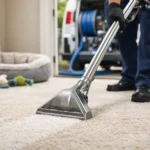
Professional hot water extraction is often the better fit when carpet needs a true reset between tenants. It cleans deeper, helps remove trapped soil and odor, and avoids the heavy residue that can make carpet resoil quickly. Fast drying also matters in a rental setting because the goal is to get the property back on the market without unnecessary delay.
Tile and grout
Tile can be deceptive. From a distance it may look fine, but grout lines often hold grease, dirt, and discoloration that regular mopping leaves behind. In kitchens, bathrooms, laundry rooms, and entryways, that buildup can make the entire floor look older than it is.
At move-out, tile cleaning should focus on removing residue rather than pushing it around. Deep cleaning grout and lifting embedded soil can restore a brighter, more uniform appearance. That is especially useful in rental homes where small cosmetic improvements make a strong impression during showings.
Hardwood floors
Hardwood needs a careful hand. Many move-out cleanups go wrong because someone uses too much water or an all-purpose cleaner that leaves a hazy film. At that point the floor may technically be clean, but it does not look cared for.
A proper hardwood floor cleaning removes dust, tracked-in grit, and surface residue without oversaturating the wood. It can also help bring back a cleaner, more polished look before photos, walkthroughs, or a new lease signing. If the floor has deeper wear or finish damage, cleaning helps reveal what can be improved and what may need refinishing instead.
What landlords and property managers should watch for
Move-out floor cleaning is easier when expectations are realistic. Not every mark is dirt, and not every stain will come out completely. Some issues are wear-related, especially in older rentals or high-traffic units. The goal is to restore the best possible condition for the next occupant while protecting the flooring itself.
A good inspection usually starts with a few questions. Is the issue surface soil or permanent damage? Is there odor in the carpet pad, or only on the surface? Has the hardwood been cleaned correctly in the past, or does it have product buildup? Is grout discolored from dirt, or has it become permanently stained?
These distinctions matter because they affect both cost and outcome. In some cases, professional cleaning is enough to make the floor rental-ready. In others, cleaning is the first step before repair or replacement decisions are made.
For real estate agents and property managers, consistency also matters. Working with the same crew each time can make turnover planning easier because the process is familiar and the results are more predictable. That kind of accountability can save time when schedules are tight and multiple vendors are involved.
What tenants should know before move-out
Tenants often assume floor cleaning is only about getting a deposit back. It certainly can affect that, but it also helps avoid last-minute problems during inspection. Floors tend to be one of the most closely reviewed parts of a rental because they show stains, odor, and wear so clearly.
If there have been pets, spills, or heavy use, it is smart to address floors before the final walkthrough. Waiting until the last day limits your options. A rushed clean rarely produces the same result as a proper service scheduled with enough time for drying and inspection.
It also helps to understand your lease. Some agreements require professional carpet cleaning at move-out. Others leave more room for interpretation. Either way, a clean floor supports your case that the property was returned in good condition.
Why DIY floor cleaning can fall short
There is a place for basic do-it-yourself cleaning, especially when the floors are already in strong condition. But move-out situations are different because the standard is higher. The property is being judged for handoff, deposit decisions, or market readiness.
Store-bought carpet machines can leave excessive moisture or detergent behind. Mops may spread tile residue rather than remove it. Hardwood cleaners used too heavily can create buildup that dulls the finish. These are common problems, and they often make floors look worse a few days later.
There is also the time factor. A tenant trying to pack, move, return keys, and clean the entire property may not have the time or equipment to handle floors thoroughly. For landlords and property managers, having the floors professionally cleaned can reduce back-and-forth and help keep the turnover process on track.
When professional floor cleaning makes the most sense
Professional service is especially useful when a rental has visible traffic patterns, odor concerns, pet issues, sticky tile residue, dull hardwood, or a short turnaround before the next showing. It also makes sense when the goal is to present the property at its best rather than simply meet a minimum cleaning standard.
In Montgomery County, where many rental homes and townhomes see steady family use, floors often need more than a surface clean between occupants. A careful, experienced approach can make the property feel refreshed without adding unnecessary disruption. Companies that specialize in carpet, tile, and hardwood cleaning understand that the floor type changes the method, and the method changes the result.
That is part of why owner-operated service still matters. When the same crew handles the work, there is clearer accountability and a better understanding of what property managers, homeowners, and tenants need from one job to the next. White Knight Carpet Cleaning has built its reputation around that kind of consistency, along with practical cleaning methods that respect both the home and the timeline.
A clean floor supports a better handoff
Move-out cleaning is really about transition. One person is leaving, another is arriving, and the condition of the floors sets the tone for that exchange. Clean carpet, refreshed tile, and properly cared-for hardwood help a rental feel ready again.
If you are preparing a unit for inspection, listing, or the next tenant, start with the surfaces that take the most wear. Floors do more than complete the room. They shape the first impression, and they often decide whether the property feels merely vacant or truly move-in ready.