






A carpet usually tells the truth about how a home is lived in. You can see it in the hallway outside the kids’ rooms, the family room where everyone gathers, and the steps that take the most daily wear. A solid home carpet maintenance guide is not about keeping carpet looking untouched. It is about helping it stay clean, last longer, and feel better underfoot in a real, active home.
For many homeowners, the biggest mistake is waiting until the carpet looks obviously dirty. By that point, much of the problem is not just surface debris. Soil has worked its way down into the fibers, traffic lanes are starting to dull, and spots that seemed minor have had time to set. Regular care is simpler, less expensive, and far more effective than trying to reverse months or years of buildup.
Why a home carpet maintenance guide matters
Carpet does more than soften a room. It also catches dust, tracked-in grit, pet dander, and everyday debris that would otherwise stay in the air or move across hard surfaces. That can be helpful, but only if the carpet is maintained well. If it is not, those trapped particles grind against the fibers and wear them down over time.
This is why carpet maintenance is partly about appearance and partly about protection. Good habits help preserve color, texture, and cushioning. They also support a cleaner indoor environment, which matters even more in homes with children, pets, or family members sensitive to dust and allergens.
There is also a cost question. Replacing carpet is expensive, and neglected carpet tends to age faster. A few consistent habits and periodic deep cleaning usually cost much less than early replacement.
The weekly habits that make the biggest difference
Most carpet care comes down to simple repetition. Vacuuming is the most important routine step because it removes dry soil before it gets pressed deeper into the pile. In low-traffic rooms, once a week may be enough. In busier areas like hallways, stairs, entryways, and family rooms, two or three times a week is often the better choice.
Technique matters as much as frequency. Slow passes lift more debris than quick ones, especially in high-traffic lanes where dirt settles deep into the fibers. If your vacuum has height settings, adjust them to match the carpet so the machine can clean effectively without being too aggressive.
Entry points deserve extra attention. Much of what ends up in carpet comes from outside, including grit that acts almost like sandpaper. Using doormats and removing shoes indoors can noticeably reduce wear. These are small household habits, but they help protect carpet from the kind of damage that vacuuming alone cannot fully undo.
If you have pets, maintenance usually needs to be more frequent. Pet hair, dander, and tracked-in soil build up quickly, and accidents require a faster response. In those homes, staying ahead of the mess is easier than trying to catch up later.
How to handle spills before they become stains
The first few minutes after a spill matter more than any product you keep under the sink. The right response is to blot, not scrub. Scrubbing can spread the spot, push it deeper into the carpet, and rough up the fibers so the area looks worn even after the stain is gone.
Use a clean white cloth or paper towels to absorb as much liquid as possible. Work from the outside of the spill inward so it does not spread. After blotting, a small amount of water can help with many fresh spills, followed by more blotting to lift the residue.
Not every stain should be treated the same way. Greasy food spots, pet accidents, coffee, and wine all behave differently. Strong store-bought spot removers can help in some cases, but they can also leave residue, lighten color, or damage the backing if overused. When in doubt, it is better to use a mild approach first than create a larger problem trying to fix a small one.
One common issue is over-wetting. Homeowners often assume more water means a better rinse, but too much moisture can soak through to the pad and linger there. That can lead to odors, wicking, or recurring spots that seem to return after the carpet dries.
Traffic lanes need their own plan
The parts of your carpet that look the worst are not always the dirtiest overall. They are often the areas under the most repeated pressure. Hallways, stairs, room entrances, and the spaces in front of sofas collect both soil and wear, which is why they flatten and darken first.
The best way to manage traffic lanes is to treat them as separate zones. Vacuum them more often than the rest of the room. Rotate area rugs when possible. Rearranging furniture occasionally can also change walking patterns and give some sections a break.
If a traffic lane still looks dull after vacuuming, the issue may be embedded soil rather than surface dust. That is usually the point where professional deep cleaning becomes more than a cosmetic service. It helps remove what routine vacuuming cannot fully reach.
What professional cleaning adds
A good home carpet maintenance guide should include one point clearly: regular vacuuming and spot care are essential, but they do not replace professional deep cleaning. Carpets hold onto fine soil well below the surface, and that buildup gradually affects both appearance and fiber life.
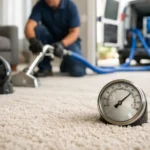
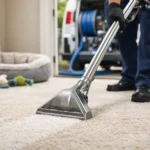
Professional hot water extraction is widely recommended because it flushes out embedded dirt and residue more thoroughly than many do-it-yourself methods. It is especially useful for homes with pets, children, heavy foot traffic, or lingering odors. The method matters here. Some low-moisture or rental machine approaches may seem convenient, but results can vary, and over-wetting or detergent residue can create problems afterward.
Truck-powered hot water extraction tends to provide stronger soil removal and faster drying when done correctly. That balance matters to homeowners because nobody wants cleaner carpet that stays wet too long. Faster drying helps reduce disruption and lowers the chance of musty odors.
How often should carpet be professionally cleaned? It depends on how the home is used. For some households, every 12 months is enough. For busy family homes, homes with pets, or properties preparing for sale or rental turnover, every 6 to 9 months can make more sense.
DIY carpet cleaning has limits
There is nothing wrong with handling small maintenance tasks yourself. Vacuuming, quick spot treatment, and routine prevention are exactly what homeowners should do. Problems usually start when a DIY machine is expected to deliver the same result as a professional system.
Rental units and home carpet cleaners can help freshen the surface, but they often have less extraction power. That means more moisture and detergent may remain in the carpet. If the carpet takes too long to dry or feels stiff afterward, residue may be part of the issue.
This does not mean DIY cleaning never helps. It means expectations should be realistic. For light upkeep between professional visits, it can be useful. For heavily soiled carpet, recurring spots, pet odor, or move-in and pre-sale cleaning, professional service is usually the better choice.
Special care for homes with kids and pets
Family homes need a practical approach, not a perfectionist one. Kids sit on carpet, pets nap on it, and everyone tracks something in eventually. The goal is to keep the carpet clean enough to support a healthy, comfortable home without turning maintenance into a full-time job.
That starts with consistency. Address accidents quickly, vacuum often, and pay attention to the rooms where everyone spends the most time. Choose cleaning methods and products carefully if children and pets are frequently on the floor. Gentle, well-rinsed cleaning is usually the safest direction.
Odor is another sign homeowners should not ignore. If a room still smells off after the visible spot is gone, something may have reached the pad or remained in the fibers. Surface treatment alone may not solve it.
When to schedule help instead of waiting longer
Some carpets do not look terrible, but they still need professional care. If the color seems dull, traffic lanes remain dark after vacuuming, or the carpet feels sticky or matted, buildup is likely affecting the fibers. The same is true if spots keep reappearing after they seemed removed.
Professional cleaning is also worth planning before a carpet reaches the worst stage. Homeowners in Maryland often schedule service around seasonal changes, holiday hosting, or move-related transitions because those moments make the need more obvious. Real estate agents and property managers do the same when presentation and turnaround matter.
For households that want consistency and accountability, working with an experienced local company matters. White Knight Carpet Cleaning has built its reputation around that kind of dependable service – one crew, one standard, and a method designed for deep cleaning with fast drying.
Carpet lasts longer when it is cared for steadily, not rescued at the last minute. A few good habits at home, paired with professional cleaning at the right time, keep your floors looking better and your home feeling cleaner in the ways that matter every day.