






A carpet can look clean on the surface while still holding tracked-in soil, pet residue, food spills, and allergens deep in its fibers. That is why the question of steam cleaning vs hot water extraction matters. The terms are often used as if they mean the same thing, but the equipment, cleaning action, and results can be very different.
For most wall-to-wall residential carpeting, professional hot water extraction is the method manufacturers commonly recommend for periodic deep cleaning. It combines cleaning solution, heated water, agitation, and powerful vacuum recovery to remove embedded soil rather than simply freshening the carpet’s appearance.
What People Usually Mean by Steam Cleaning
True steam cleaning uses vapor produced at very high temperatures. Because steam contains relatively little moisture, it can be useful for certain hard, sealed surfaces where heat can loosen grime and sanitize areas without soaking them. Think tile, grout, fixtures, and some upholstery applications when the material is appropriate for steam.
Carpet is a different situation. True steam does not provide the flushing action needed to rinse away a large amount of dissolved dirt, detergent, oils, and residue from carpet backing and fibers. Heat alone can loosen soil, but that soil still needs to be removed.
The phrase “steam cleaning” is also commonly used as a casual name for hot water extraction. Many homeowners say they want their carpets steam cleaned when what they actually need is a professional extraction service. There is nothing wrong with the wording, but understanding the difference helps set realistic expectations for drying time and cleaning results.
Steam Cleaning vs Hot Water Extraction: The Main Difference
The main distinction is simple: steam cleaning relies primarily on vapor and heat, while hot water extraction uses heated water and cleaning solution that are immediately recovered by strong suction.
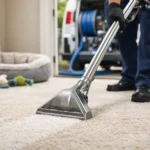
With hot water extraction, a trained technician applies a measured cleaning solution to help break down soil and spots. Heated water is then introduced into the carpet fibers, and a powerful vacuum removes the water, solution, and suspended dirt. The process rinses the carpet instead of leaving loosened soil behind.
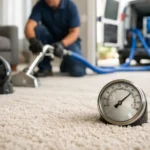
A truck-powered system has an advantage here because it can deliver strong heat and vacuum power without relying only on a small portable machine. Better recovery means less moisture left in the carpet, which supports faster drying when the job is performed correctly.
For a Montgomery County household with children, pets, busy entryways, or everyday spills, extraction is usually the more practical choice for deep carpet care. It addresses the dirt that settles below the visible surface, where ordinary vacuuming cannot reach.
Why Hot Water Extraction Is Often Recommended for Carpet
Carpet manufacturers generally advise periodic professional cleaning using hot water extraction because it is designed to clean thoroughly while protecting the carpet when performed with the proper products and techniques. The goal is not to saturate the carpet. It is to flush soils out and recover as much moisture as possible.
This matters for both appearance and carpet life. Gritty soil can act like sandpaper underfoot, gradually wearing down carpet fibers. Oils from cooking, shoes, skin, and pets can also make carpet look dull and attract more dirt over time. Removing these contaminants helps a carpet maintain its color, texture, and comfort.
Hot water extraction can also be a sensible choice for households concerned about indoor cleanliness. Carpet fibers can hold dust, dander, and other fine particles that become stirred up through normal activity. A thorough cleaning does not replace regular vacuuming or address every air-quality concern, but it can remove a significant amount of settled material from the floor covering.
The Importance of Proper Technique
No cleaning method works well without the right process. Too much cleaning solution, poor rinsing, or weak extraction can leave a carpet feeling stiff or cause it to resoil quickly. Excess water can also extend drying time.
An experienced professional adjusts the approach to the carpet type, soil level, and condition of the home. Delicate fibers, heavily soiled traffic lanes, pet spots, and older carpet each call for thoughtful treatment. This is one reason a consistent, owner-operated crew can provide real value: the people caring for the home are accountable for the work from beginning to end.
Does Hot Water Extraction Leave Carpets Too Wet?
It should not leave carpets soaked. When truck-powered equipment and proper cleaning practices are used, most carpets are typically dry within several hours, though exact drying time depends on humidity, carpet thickness, airflow, and the amount of soil treatment required.
A plush carpet with heavy traffic-lane buildup may take longer than a low-pile carpet that receives routine care. Homes with open windows, ceiling fans, or air conditioning running often dry more quickly. On humid Maryland summer days, allowing good indoor airflow makes an even bigger difference.
After professional cleaning, it is best to limit foot traffic until the carpet is dry. If walking on it is necessary, clean socks or indoor shoes are preferable to shoes that may track soil back onto damp fibers. Furniture pads or tabs can be used where needed to protect the carpet from furniture legs during the drying period.
When Steam Cleaning May Be the Better Fit
Steam has its place, just not as the standard answer for deep carpet cleaning. It may be appropriate for selected hard surfaces that tolerate heat and moisture, including certain tile and grout areas. However, surface type matters. Steam can damage unsealed wood, some laminates, sensitive finishes, and materials with weakened grout or caulking.
For hardwood floors, more moisture and heat are not automatically better. A professional should use a cleaning method suited to the floor’s finish and condition. The same caution applies to upholstery and area rugs, which may have dyes, backing materials, or fibers that require a different process.
The practical question is not which method sounds stronger. It is which method is right for the material being cleaned and the type of soil being removed.
What Homeowners Should Expect From a Professional Carpet Cleaning
A careful carpet cleaning appointment begins before the first cleaning pass. The technician should inspect the carpet, identify spots and traffic areas, and discuss concerns such as pet accidents, furniture marks, or previous cleaning issues. Some stains can be improved substantially but cannot be guaranteed to disappear, particularly if they are old, chemically altered, or have damaged the fiber’s color.
The carpet should be vacuumed regularly before and after professional service, but deep extraction handles the material that routine vacuuming leaves behind. A good cleaning also includes appropriate spot treatment and attention to high-use areas, not just fast passes across open rooms.
For most homes, scheduling professional extraction about every 12 to 18 months is a reasonable starting point. Families with pets, young children, allergies, or heavy foot traffic may benefit from more frequent service. Real estate agents and property managers may also schedule cleaning between tenants or before listing a home, when carpet presentation can shape a buyer’s or renter’s first impression.
Common Questions About Carpet Cleaning
Is hot water extraction safe for children and pets?
When performed with suitable products and proper recovery, hot water extraction is a safe, practical option for family homes. Ask about the cleaning solutions being used and follow any guidance about keeping children and pets off the carpet until it is dry.
Will hot water extraction remove every stain?
No method can promise to remove every stain. Fresh spills usually respond better than old or previously treated spots. Permanent discoloration, bleach damage, dye loss, and stains that have reached the backing may remain even after professional treatment. Honest expectations are part of good service.
Can I rent a machine instead?
Rental machines can help with a small, recent spill, but they usually do not match the heat, vacuum recovery, or rinsing ability of professional truck-powered equipment. They can also leave too much detergent or moisture behind if used incorrectly. For whole-home cleaning or persistent soil, professional extraction is generally the more dependable option.
A clean carpet should feel comfortable underfoot, dry in a reasonable time, and free from sticky residue. For homeowners who want deep cleaning without handing their home over to an unfamiliar rotating crew, choosing an experienced local professional and the right method can make the care of a well-used carpet feel straightforward again.