





A rental turnover cleaning checklist example gives property managers and owners a repeatable way to prepare a unit without overlooking the details that affect a new tenant’s first impression. A clean rental is more than a courtesy. It helps document the property’s condition, protects flooring and fixtures, and makes a vacant home feel ready to move into.
For homes in Montgomery County, where renters have many choices, a thorough turnover can also help reduce the time a unit sits empty. The key is to work in a logical order: inspect first, clean from top to bottom, then complete a final walk-through under good lighting.
Start With an Empty-Unit Inspection
Cleaning should begin after the former tenant’s belongings are removed. Before bringing in supplies, walk through every room with the move-out condition report, lease requirements, and a camera or phone for documentation. Look for stains, wall damage, missing hardware, lingering odors, water leaks, pest evidence, and damaged flooring.
This inspection separates normal wear from damage that may require repair or replacement. It also prevents a common turnover mistake: cleaning around an issue that should have been addressed first. For example, a carpet stain may be removable, but a loose transition strip or damaged baseboard should be repaired before the final cleaning visit.
Open windows where appropriate, turn on lights, and test basic functions such as smoke detectors, exhaust fans, faucets, toilets, appliances, locks, and blinds. Cleaning a unit before confirming that these items work can create unnecessary backtracking.
Rental Turnover Cleaning Checklist Example by Area
Use this checklist as a working guide. The level of cleaning depends on the lease, the condition of the unit, and the type of property, but each area should be inspected and addressed before the next resident receives keys.
Entry, Living Areas, and Bedrooms
These rooms set the tone for the entire property. Start high and work downward so dust does not settle on freshly cleaned floors.
- Remove cobwebs from ceilings, corners, vents, and light fixtures.
- Dust ceiling fans, blinds, window sills, baseboards, doors, trim, shelves, and closet interiors.
- Wipe light switches, outlet covers, door handles, cabinet pulls, and other high-touch surfaces.
- Clean interior windows and glass doors, including tracks where dirt collects.
- Check walls for marks, nail holes, tape residue, and scuffs. Clean or repair as needed before touch-up painting.
- Vacuum upholstered surfaces left with the property, including under cushions when applicable.
- Vacuum hard flooring edges and corners before mopping or polishing the appropriate surface.
Do not overlook closets. A clean, empty closet signals care, while dust on shelving or hair in the corners can make an otherwise well-prepared unit feel neglected.
Kitchen
The kitchen often requires the most detailed work because grease and food residue build up in places tenants rarely see. Remove all drawer liners, crumbs, and loose debris before applying cleaning products.
Clean the inside and outside of cabinets and drawers, paying close attention to handles, hinges, and shelf corners. Degrease the range hood, backsplash, stovetop, oven exterior, and surrounding wall. If the lease and appliance condition call for it, clean the oven interior and racks as well.
The refrigerator should be emptied, defrosted if needed, and cleaned inside and out. Pull it forward when possible to vacuum or clean the floor behind it. Wipe the dishwasher interior, filter area, door seal, and control panel. Finish by sanitizing the sink, faucet, garbage disposal splash guard, and countertops.
A kitchen does not need a strong fragrance to feel clean. Neutral, fresh-smelling results are better than using heavy products that may bother a new tenant or hide an unresolved odor.
Bathrooms
Bathrooms require careful attention because mineral buildup, soap residue, and moisture can quickly make a clean space look worn. Use products suited to the surface. Abrasive tools may scratch fiberglass, natural stone, or older fixtures.
Clean and disinfect the toilet inside and out, including the base, seat hinges, and surrounding floor. Scrub the tub, shower walls, door tracks, fixtures, sink, vanity, mirrors, and exhaust fan cover. Check grout and caulk for staining, cracks, or mildew that cleaning alone will not correct.
Wipe inside medicine cabinets, drawers, and vanity storage. Run water in every fixture and look for slow drains or drips. Replacing a worn toilet seat, cracked caulk, or heavily stained shower curtain liner may be a small expense that noticeably improves the showing condition.
Floors, Carpets, and Odor Control
Floors carry the evidence of everyday living. They are also one of the first things prospective tenants notice when they walk through a unit. Vacuuming is necessary, but it is not always enough for carpeted rentals after a move-out.
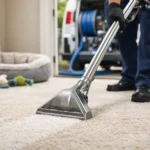
For carpet, assess traffic lanes, pet spots, spills, and odors before deciding on the service needed. Professional truck-powered hot water extraction can remove embedded soil that routine vacuuming leaves behind, while helping carpets dry quickly enough to keep the turnover moving. It is a practical choice when carpets are otherwise in good condition and replacement is not justified.
Not every stain can be removed. Bleach, dye, paint, burns, and permanent pet damage may require a repair, patch, or replacement. Honest evaluation helps owners avoid spending money on repeated cleaning when the carpet has reached the end of its useful life.
For hardwood, tile, vinyl, and laminate, use the correct cleaner and moisture level. Excess water can damage wood and seep into seams, while harsh chemicals can dull finishes. Clean grout lines and floor edges where buildup is most visible. If odor remains after the unit is cleaned, investigate the source rather than masking it with air freshener. Odors can come from carpet backing, drains, appliances, pet contamination, or moisture problems.
Do a Final Market-Ready Walk-Through
Once cleaning and repairs are complete, return to the unit as if you were seeing it for the first time. Enter through the main door, look across each room, and check for overlooked debris, streaks, fingerprints, burned-out bulbs, and lingering smells. View floors from different angles because sunlight and overhead lighting can reveal spots missed during cleaning.
Bring a small trash bag for last-minute items such as tape, labels, cleaning cloths, or hardware packaging. Make sure all personal supplies and equipment are removed from cabinets, closets, and the garage or storage area. Lock windows and doors, confirm that keys and remotes are accounted for, and record final photos after the property is ready.
When Professional Cleaning Is Worth Scheduling
A basic turnover may be manageable for a lightly used unit, especially when the previous tenant left it in good condition. Professional help becomes more valuable when the property has set-in carpet soil, pet odor, heavily used tile, large square footage, a short vacancy window, or a listing that needs to show well immediately.
For property managers, consistency matters as much as cleaning power. Working with an established local company such as White Knight Carpet Cleaning means the same owner-operated crew can provide dependable carpet and floor care from one turnover to the next. That accountability is especially helpful when you are coordinating painters, maintenance professionals, and new move-in dates.
A thoughtful turnover does not have to mean replacing every worn item or using the strongest chemical available. It means addressing what the next resident will see, touch, and smell, while preserving the surfaces that still have useful life. When the unit feels clean, cared for, and ready on day one, you give the new tenancy a better place to start.