





A rented machine and a free Saturday can seem like the obvious answer when carpets look dull or tile grout has darkened. But professional floor cleaning vs DIY is not simply a question of who can make the floor look better for the afternoon. The right choice depends on the flooring material, the type of soil involved, how long it has been there, and how much risk you are willing to take with a surface you use every day.
For routine upkeep, do-it-yourself cleaning has a useful place. For embedded dirt, pet accidents, heavy traffic patterns, move-out preparation, or floors that have not been professionally maintained in years, professional service often delivers a safer and more lasting result.
Where DIY Floor Cleaning Works Well
Home cleaning is essential between professional appointments. Vacuuming carpet regularly removes dry soil before it is ground deeper into the fibers. Sweeping and using a well-wrung microfiber mop helps protect sealed hardwood and keeps tile from developing a dull film. Promptly blotting spills also gives stains less time to set.
DIY is usually a sensible choice when the issue is light and recent. A small spill on carpet, muddy footprints by the door, or a weekly hard-surface cleanup does not always require a service call. Homeowners who use the correct product, follow label directions, and avoid over-wetting the floor can maintain a clean appearance at a reasonable cost.
The limitation is that household tools are designed primarily for maintenance. Consumer carpet machines generally have less water pressure, heat, and extraction power than truck-powered equipment. A mop can clean surface soil from tile, but it may not fully remove buildup that has settled into porous grout. On wood, the wrong cleaner or too much moisture can leave residue, haze the finish, or cause damage at seams.
What Professional Cleaning Does Differently
Professional cleaning begins with identifying the floor, the finish, and the source of the problem. That matters because a method that works well on durable ceramic tile may be inappropriate for natural stone or hardwood. Likewise, a carpet stain may need a different approach depending on whether it came from food, pets, oil, or tracked-in soil.
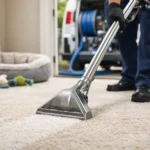
For carpet, professional hot water extraction uses heated water and cleaning solutions to loosen embedded soil, followed by powerful extraction to remove the solution and moisture. Truck-powered hot water extraction offers substantially stronger recovery than a typical rental machine, helping carpets dry faster while removing more of what regular vacuuming leaves behind.
This is especially helpful in active homes. Fine grit, pet hair, allergens, and oils from feet and shoes settle below the carpet surface over time. Even when carpet still looks acceptable, those particles can contribute to wear by rubbing against fibers as people walk across the room.
Professional tile and grout cleaning can address discoloration that mopping does not reach. A trained cleaner can also determine whether a floor needs deep cleaning, spot treatment, or sealing after cleaning. With hardwood, the goal is not to flood the floor or use harsh products. Proper professional care focuses on removing dirt and residue while respecting the finish and the condition of the wood.
The Real Cost: Rental Fees Versus Results
DIY often looks cheaper at first. There is a rental fee, cleaning solution, perhaps a stain treatment, and your own labor. If the floor responds well, that can be money well spent.
The calculation changes when a job takes several hours, the equipment must be picked up and returned, or the floor needs a second pass because it remains dirty or too wet. Rental machines can also leave behind more moisture if they are overfilled, moved too quickly, or used without enough extraction passes. Wet carpet can stay damp longer than expected, which is inconvenient for families and can create odor concerns.
Professional cleaning costs more upfront, but it includes trained judgment, commercial-grade equipment, and a more efficient process. It can be particularly worthwhile before listing a home, after tenants move out, following a large gathering, or when a household is dealing with repeated pet accidents. For property managers and real estate agents, faster turnaround and better presentation may be more valuable than the lowest possible cleaning price.
A good comparison is not rental cost versus service cost alone. It is rental cost, supplies, time, drying time, and the possibility of needing to redo the work versus a thorough cleaning performed correctly the first time.
The Biggest DIY Risks by Floor Type
Carpet is forgiving in some ways, but it is easy to over-wet. Too much solution can leave a sticky residue that attracts soil, causing the carpet to look dirty again sooner. Scrubbing aggressively can also distort fibers or spread a stain. Pet spots are a common example: treating only the visible mark may not resolve odor if the contamination reached the backing or pad.
Tile can tolerate more cleaning than many surfaces, but grout needs care. Highly acidic or overly harsh products may damage some grout, natural stone, or surrounding finishes. Steam and aggressive brushes are not automatically safe for every installation. If tile remains dull after repeated mopping, the problem may be residue rather than dirt, and adding more cleaner can make that worse.
Hardwood deserves the most caution. Standing water, steam, abrasive pads, waxes, and unapproved products can cause lasting problems. A floor that looks dry on the surface may still have moisture working into edges or gaps. When hardwood has deep scratches, worn finish, cupping, or black staining, cleaning alone may not be the right remedy. A professional assessment can help distinguish a cleaning need from a repair or refinishing need.
When to Call a Professional
There is no rule that every floor needs professional cleaning on a fixed schedule. Homes with children, pets, heavy foot traffic, or allergies may benefit from more frequent carpet service than a low-traffic household. Light-colored carpet near entrances often needs attention sooner than carpet in a guest room.
Consider professional help when stains keep returning, odors remain after spot cleaning, traffic lanes are visibly darker, or the floor feels sticky despite regular cleaning. It is also a practical choice when you are preparing for guests, moving in or out, selling a home, or trying to restore floors after a busy season.
For Montgomery County homeowners, working with a local, consistent crew can make the process more comfortable. White Knight Carpet Cleaning has served area homes since 1982 with an owner-operated approach, so customers know who is responsible for the work inside their home.
A Better Plan Than Choosing One or the Other
The best approach is usually not DIY or professional cleaning. It is DIY maintenance supported by professional deep cleaning when the floor needs more than surface care.
Vacuum carpets often, especially near entrances and in rooms where the family gathers. Use mats at exterior doors, remove spills promptly, and avoid walking on carpet with dirty shoes when possible. For hard surfaces, use products made for that specific floor and keep mops damp rather than wet. These habits reduce wear and help professional results last longer.
Then schedule deep cleaning based on your home rather than a calendar alone. A busy family room may need attention sooner than a formal dining room. A rental property may need a thorough reset between occupants. A home going on the market may benefit from cleaning that makes rooms feel brighter, fresher, and ready for showings.
The goal is not to make every floor look brand new forever. It is to protect the surfaces you have, keep the home comfortable for the people who live there, and address bigger cleaning needs before they become more expensive problems. When a floor needs more than a mop, vacuum, or rental machine can reasonably provide, experienced care is often the practical next step.