






A carpet can look clean on the surface while holding soil deep in its fibers, especially in busy rooms, entryways, and homes with children or pets. This carpet fiber cleaning guide explains why the material underfoot matters before you choose a cleaner, rent a machine, or schedule professional service. The right method can refresh your carpet and protect its appearance. The wrong one can leave residue, cause rapid resoiling, or damage delicate fibers.
Carpet cleaning is not one-size-fits-all. Nylon, polyester, wool, and olefin all respond differently to moisture, heat, agitation, and cleaning products. Knowing what you have helps you make better decisions for your home and helps a professional cleaner select the proper approach.
Start by Identifying Your Carpet Fiber
If you still have your carpet paperwork, look for the fiber type, manufacturer care instructions, and any stain-protection information. If the paperwork is gone, a small sample from a closet or an inconspicuous edge can often help a cleaning professional identify the material. Carpet labels may also be found in a closet, along a seam, or on leftover installation pieces.
Nylon is one of the most common residential carpet fibers because it is durable, resilient, and well suited to active households. It can respond very well to professional hot water extraction, particularly when soil and cleaning solution are thoroughly removed. Nylon does need timely attention for spills, though, because some stains can set if they are allowed to dry.
Polyester is naturally resistant to many water-based stains and is known for its soft feel and rich color. It can be a good fit for bedrooms and lower-traffic spaces, but oily soils can be more difficult to remove. Grease from cooking, lotions, pet fur oils, and tracked-in driveway residue can cling to polyester fibers and make traffic lanes look dull.
Olefin, also called polypropylene, is highly moisture resistant and commonly used in looped Berber-style carpets and some indoor-outdoor products. It resists many stains, but it attracts oils and can be flattened by heavy foot traffic. Strong scrubbing or overly aggressive tools may damage loop construction, so the cleaning method matters.
Wool is a natural, beautiful fiber that requires the most care. It is absorbent and can be sensitive to high heat, strong alkaline cleaners, bleaching agents, and excessive moisture. Wool carpet should be cleaned with products and procedures designed specifically for natural fibers. A cleaner should also take steps to avoid overwetting and long drying times.
A Carpet Fiber Cleaning Guide for Common Spills
The first few minutes after a spill can make a major difference. Blot the area promptly with a clean, white absorbent cloth. Press down firmly, then lift straight up. Do not rub back and forth, since rubbing can push the spill farther into the carpet and distort the fiber texture.
Use plain water sparingly for many fresh water-based spills, blotting between light applications. Avoid pouring water directly onto the carpet. Too much moisture can soak through to the backing and pad, increasing drying time and creating odor concerns.
Be cautious with internet stain remedies. Vinegar, baking soda, dish soap, hydrogen peroxide, and other household products may help in certain situations, but they are not universally safe. A product that works on synthetic carpet can discolor wool, remove stain protection, or leave a sticky residue behind. Bleach should never be used on residential carpet unless the carpet manufacturer specifically approves it and the product is handled by a trained professional.
For food, drinks, pet accidents, and tracked-in dirt, remove solids first and blot gently. For oily spills, such as butter, makeup, salad dressing, or garage residue, professional treatment is often the safer choice. Oils tend to spread and bond to fibers, particularly polyester and olefin. Repeated DIY applications can make the affected area larger or leave detergent that attracts more soil.
Pet accidents deserve special attention. Even after the visible spot disappears, urine can remain in the backing or padding. That is why an odor may return on humid days or after the area gets damp. Surface cleaning alone may not resolve a deeper contamination issue. A qualified cleaner can assess whether treatment needs to reach beneath the carpet face fibers.
Match the Method to the Material and Soil Level
Vacuuming is the foundation of carpet care. Regular vacuuming removes dry particles before they are ground into the pile by daily foot traffic. High-traffic areas may need attention two or three times a week, while less-used rooms can often be vacuumed weekly. Use a vacuum setting that allows the machine to move easily without beating up the carpet pile.
Spot cleaning handles small incidents, but it does not replace periodic deep cleaning. Soil can build up gradually, so a carpet may appear acceptable until traffic lanes become noticeably darker or the room begins to feel stale. Families with pets, young children, allergies, or heavy daily traffic usually benefit from more frequent professional cleaning than a lightly used household.
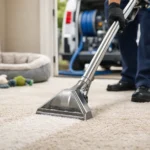
Truck-powered hot water extraction is a strong choice for many synthetic residential carpets because it flushes out embedded soil and cleaning solution while providing powerful recovery. When performed correctly, it uses appropriate cleaning agents, controlled moisture, and thorough extraction. That balance is what supports a deep clean without leaving carpets overly wet.
Fast drying is more than a convenience. It helps reduce the chance that soils wick back to the surface and allows your household to return to normal sooner. Drying time depends on humidity, airflow, carpet thickness, soil level, and the amount of treatment needed. Opening interior doors, running ceiling fans, and keeping the home at a comfortable temperature can help carpets dry more efficiently after cleaning.
Wool and specialty fibers may require lower-moisture procedures, fiber-safe solutions, or more careful temperature control. There is a trade-off here: the strongest possible cleaning method is not always the best method for the carpet. The goal is to remove soil effectively while preserving the fiber, backing, color, and texture.
Protect Carpet Between Professional Cleanings
Small habits can extend the life of your carpet considerably. Place quality mats at exterior doors, and clean those mats regularly so they continue to capture grit instead of spreading it inside. Consider a shoes-off routine in carpeted rooms, especially during wet Maryland winters or when landscaping and yard work bring in extra soil.
Move furniture occasionally if possible. This distributes wear and prevents the same pathways from becoming compressed. Use furniture pads or protective cups under heavy pieces to reduce dents, and avoid dragging furniture across the room. For small indentations, gentle grooming after cleaning may help restore the pile, although results depend on the fiber and how long the pressure was present.
Do not wait until the carpet looks severely soiled to arrange professional cleaning. Embedded grit acts like fine sandpaper underfoot, gradually wearing down fibers. Regular care helps carpets hold their texture and color longer, which protects the investment you made in your home.
For rental turnovers and real estate listings, clean carpet can also change how a property presents. A fresh, odor-free floor helps prospective tenants and buyers focus on the home itself rather than the signs of its previous use. In these situations, dependable scheduling and consistent results can be just as valuable as the cleaning process.
When It Is Time to Call a Professional
Some carpet issues are better handled before they become permanent. Call for help when stains return after cleaning, odors persist, the carpet feels sticky or crunchy, or traffic lanes remain dark despite regular vacuuming. It is also wise to get professional guidance for wool, antique rugs, looped Berber, large pet accidents, water damage, and unknown spots that may react poorly to household chemicals.
An experienced cleaner should ask about your carpet type, the source of the stain, pets, previous cleaning attempts, and any manufacturer recommendations. That conversation helps set realistic expectations. Not every stain can be removed completely, particularly if it has changed the fiber color or caused permanent wear, but proper cleaning can often improve the appearance and prevent further damage.
For homeowners who value personal accountability, an owner-operated company such as White Knight Carpet Cleaning offers the reassurance of a consistent crew working carefully inside the home. Since 1982, that kind of hands-on experience has mattered because carpet care is not just about equipment. It is about recognizing what each floor needs and treating the home with respect.
Before your next cleaning, take a moment to identify your carpet fiber, note any problem areas, and clear a path for the rooms that need attention. A little preparation and the right method can help your carpet feel cleaner, dry faster, and serve your family well for years to come.